

Dr Merve Uzunalioğlu
Associate Member
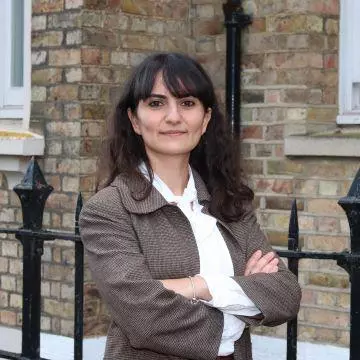
Dr Merve Uzunalioğlu
merve.uzunalioglu@spi.ox.ac.uk
I am a postdoctoral researcher for the rEUsilience project at the DSPI. My research interest is in family policies and I have experience in policy analysis and evaluation using both qualitative and quantitative methods.
My research focuses on families and how they interact with social policies. Leave and care policies lie at the core of my research, and I am curious to explore further the interplays between different family policies, how resilience in families is exercised and how all these elements together could be conceptualised through a social sustainability lens.
I hold a PhD in Social Sciences from UCL. My research was generously funded by the Luxembourg National Research Fund which also endowed me with an affiliation at LISER, where I was locally hosted in Luxembourg.
I am an Associate Member of the International Network on Leave Policies and Research, where I work closely with the coordinators of the Network as the Communication Coordinator, and I am responsible for the authorship of Turkey Country Note since 2022. I am also a member of a working group on "Theoretical Understanding of Paid Parental Leave Policies in the Context of Social Sustainability" at the COST Action titled "Parental Leave Policies and Social Sustainability."
As a member of the rEUsilience team, my current research is centred around families and their capacity to manage risks in adverse scenarios. Exploring the types of socio-economic risks that the families face and assessing their behaviours by analysing the underlying factors that shape their coping mechanisms and the extent to which social policies are available and effective in supporting families during crises constitutes the core in this project.
The rEUsilience project tackles the concept of resilience from a social policy perspective. The project endeavours to place families at the forefront, with a particular focus on comprehending their adaptive capabilities in the face of socio-economic and other potential risks. Through eight work packages concurrently led by six teams across Europe, the project seeks to gain insight into the resulting inequalities and dilemmas that European families may encounter. Further information about the project is available at the project website.