

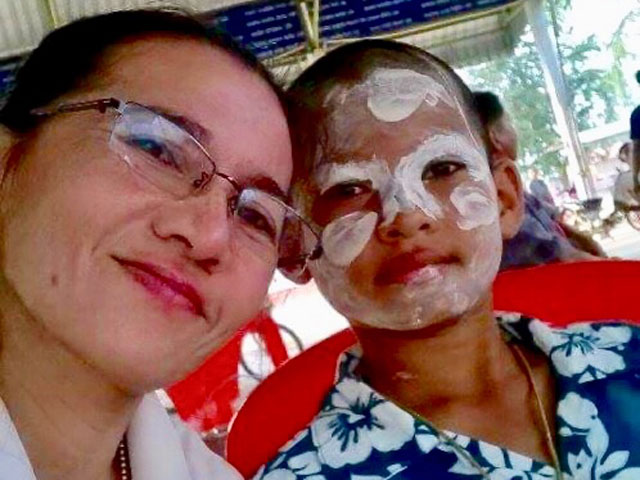
Preventing Violence Against Children in Thailand
Principal investigator: Professor Jamie M. Lachman and Professor Frances Gardner
Funded by: UNICEF Thailand & the University of Oxford
Start date: 2018
End date: 2020
Project outline
This study adapted and tested Parenting for Lifelong Health for Young Children within Thailand’s public health system. The work took place in Udon Thani province in north-eastern Thailand and focused on caregivers of children aged 2 to 9.
Parenting for Lifelong Health for Young Children is a group-based parenting programme designed to strengthen caregiver-child relationships, support positive parenting and reduce harsh discipline. This study examined whether a programme originally developed and tested in South Africa could be culturally adapted and delivered through Thailand’s public health system.
Significance
Parenting programmes need to fit the cultures, languages and service systems where they are delivered. A programme that works in one country cannot simply be transferred to another without careful adaptation.
This study established how Parenting for Lifelong Health for Young Children could be delivered through Thailand's public health system. It also paved the way for later work on programme scale-up, blended delivery, cost analysis and public health system integration.
Implementation
The project was conducted in three stages. First, the team worked with Thai caregivers, practitioners and public health partners to adapt the programme for the Thai context. Second, the team conducted a feasibility pilot with 60 primary caregivers of children aged 2 to 9. The pilot combined quantitative and qualitative research to examine how the adapted programme worked in practice. Third, the team tested an eight-session version of Parenting for Lifelong Health for Young Children in a randomised controlled trial with 120 families in Udon Thani. This final stage evaluated the effectiveness of the adapted programme compared with services as usual.
The work involved the University of Oxford, the Mahidol Oxford Tropical Medicine Research Unit, the University of Cape Town, UNICEF Thailand, the Thai Ministry of Public Health, the Provincial Public Health Office, the Department of Social Development and Human Security, and the Department of Local Administration.
Findings
The study demonstrated that Parenting for Lifelong Health for Young Children could be adapted for delivery through Thailand's public health system. The adapted programme was delivered with high fidelity, and caregivers and facilitators found the content acceptable and relevant to local family and service contexts.
The feasibility pilot also demonstrated that public health staff and local service partners could play an important role in delivering evidence-based parenting support, providing the foundation for the subsequent randomised controlled trial. The trial builds on this earlier work and will provide further evidence on the programme's effectiveness within Thailand's public health system.
This project laid the groundwork for later work on embedding parenting programmes within Thailand's public health system as part of the Global Parenting Initiative.

- McCoy, A., Lachman, J. M., Ward, C. L., Tapanya, S., Poomchaichote, T., Kelly, J., and colleagues. (2021). Feasibility pilot of an adapted parenting program embedded within the Thai public health system. BMC Public Health, 21, 1009.
- McCoy, A., Lachman, J. M., Sim, A., Ward, C. L., Tapanya, S., and Gardner, F. (2025). Cultural adaptation of parenting interventions: Formative evaluation in Thailand. Research on Social Work Practice.